
Famco Chimney Sweep in Highlands Ranch: A Homeowner’s Guide
If a previous technician installed a Famco cap or liner on your Highlands Ranch chimney, you’re probably in decent shape – Famco parts are trade-specified, not big-box substitutes. But here’s the question that actually matters: the brand name on the component doesn’t tell you whether it was sized correctly, flashed properly, or installed with the clearances your home needs. That’s the part homeowners can’t see from the driveway, and it’s exactly what a real inspection is for. If you’d rather have a trained eye look at it, call (833) 482-6314.
We work with Famco components regularly, along with Gelco and Olympia Chimney parts, so we know what these products look like when they’re installed right and when something’s off. This guide walks you through what Famco makes, how to spot their products on your chimney, and what a thorough assessment should check before anyone tells you to replace anything.
What Does Famco Actually Manufacture?
Famco is a chimney and venting manufacturer whose products are sold through professional distribution, not the hardware store aisle. That distinction matters. When you see a Famco component on a Highlands Ranch roof, it usually means a trade professional specified it – not a general contractor grabbing whatever fit the shelf.
Famco’s catalog covers the accessories that make a chimney system complete and weather-tight:
- Chimney caps and top plates – the components that keep rain, snow, and animals out of the flue.
- Chimney liners and liner components – the flue pathway that carries exhaust and combustion gases up and out.
- Wall thimbles – the pass-through fittings where a flue penetrates a wall, common on gas-appliance venting.
- Draft inducers and venting accessories – parts that support proper draft and airflow on certain appliance setups.
On Highlands Ranch homes, the Famco products we encounter most are caps and venting components on gas fireplaces and appliance flues. Wood-burning setups more often carry a stainless liner from another trade line, though Famco hardware does show up there too. A licensed local professional can confirm what’s actually on your chimney rather than guess from the roofline.
How Do You Identify a Famco Cap or Liner on Your Chimney?
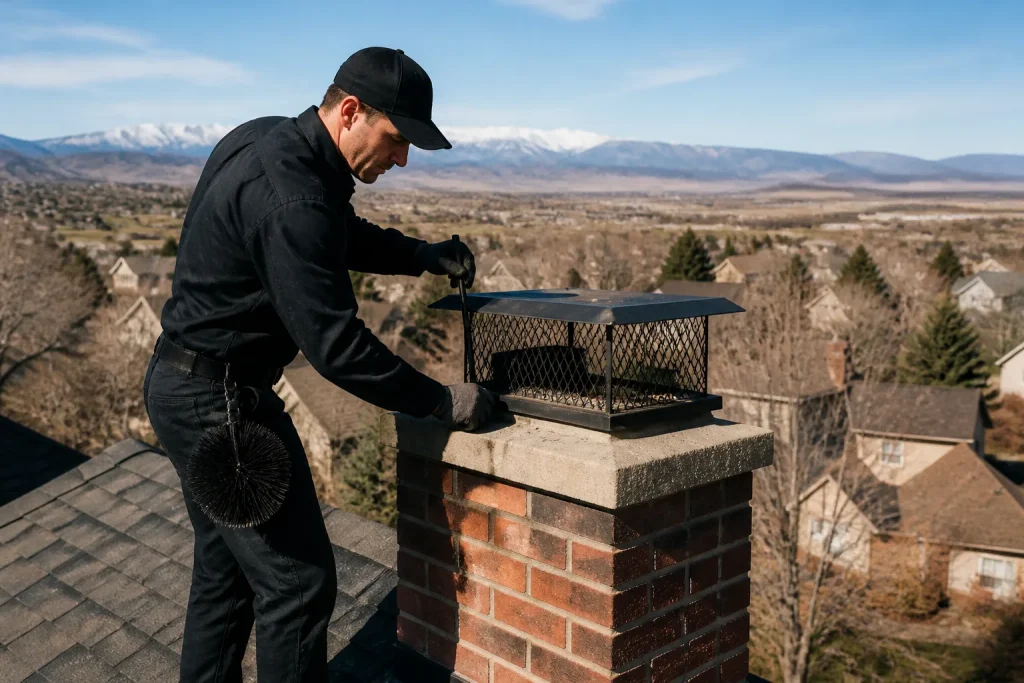
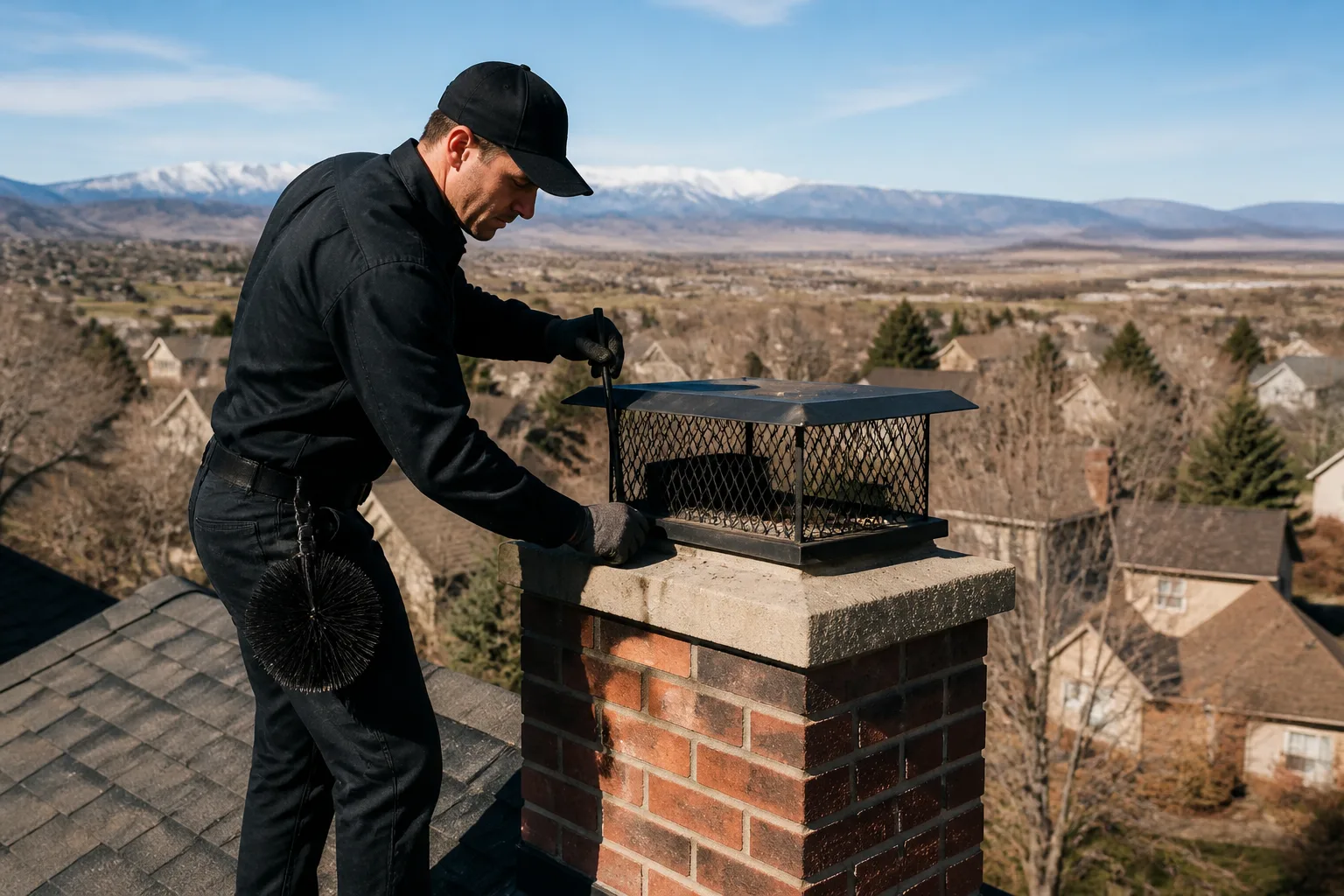
The honest answer is: not from the ground. Most Famco components carry a stamp, tag, or manufacturer markings, but you generally need to be on the roof or inside the flue to read them. A homeowner with binoculars can sometimes make out the general shape of a cap – a multi-flue Famco cap has a distinctive louvered or screened profile – but confirming the brand and model means getting up close.
Here’s what a proper identification pass looks like during a full-system inspection in Highlands Ranch:
- Cap check from the roof: brand markings, screening condition, and whether the cap is securely fastened.
- Flue-to-cap fit: whether the cap matches the flue size or is oversized and rattling.
- Top plate and seal: whether the cap is seated and sealed against the crown, not just dropped on.
- Liner inspection with a camera: the only reliable way to see the liner’s interior surface, joints, and termination.
- Clearance check: whether the component maintains the required clearance to combustibles.
When we inspect, we photograph what we find. You see the Famco tag and the surrounding condition yourself, so you’re not taking anyone’s word for it.
What Common Famco Installation Problems Should a Homeowner Watch For?
A good component installed badly is still a problem. In our experience, the issues that turn up most on Famco parts in Highlands Ranch cluster around three failure modes: sizing, sealing, and clearance.
Sizing. A cap or liner that’s too small restricts draft; one that’s oversized doesn’t seat properly and lets water and pests past. The cap has to match the flue, and the liner has to match the appliance’s venting requirements. A mismatch can work fine for a season and then show up as poor draft, smoke rollout, or corrosion.
Sealing. The top of your chimney is a horizontal surface collecting rain and snowmelt, and Highlands Ranch gets its share of both, plus freeze-thaw cycles that work seals loose. A Famco cap that isn’t sealed at the crown, or a thimble that isn’t properly caulked into the wall, invites water into the structure. That’s the root of most chimney water damage, and it’s exactly the kind of thing a diagnostic inspection catches before it spreads.
Clearance. Venting components need specific clearance to combustible framing and roofing. A general contractor who installs a thimble without checking the clearance around it creates a slow, hidden problem. A chimney specialist verifies it as part of installation.
A capsule summary: a Famco part failing inspection is almost never the part’s fault. It’s the installation.
Famco Installed by a Specialist vs. a General Contractor
There’s a real difference, and you can often tell from the inspection. A chimney specialist installs to the manufacturer’s spec, checks clearance and draft, and documents the work. A general contractor or an all-trades handyman may install a Famco part correctly at the surface but skip the checks that only matter inside the system.
How a professional inspection reveals the difference:
- Sealant quality: professional installs use appropriate high-temperature or weather-rated sealant; a generic caulk job cracks and fails within a season.
- Fastener placement: caps secured with the right fasteners, not screws that penetrate the flue or leave gaps.
- Clearance documentation: a specialist verifies and can describe the clearance at installation; a generalist often can’t.
- Draft performance: a properly sized component supports draft; a mismatch shows up in the test.
- Photo record: the difference between “trust me” and “here’s the photo of the joint.”
This is why we inspect before we recommend. The brand label on the component only tells you the part was made well. The inspection tells you whether the job was done well – and those are two different questions.
Related services in Highlands Ranch: if your assessment points toward the fireplace itself, our fireplace repair team handles firebox and refractory work; if it points toward the flue or structure, see chimney repair.
When Do Famco Components Need Replacement, Resealing, or Just Cleaning?
Two of those three answers are “don’t replace it yet,” which is a big reason homeowners get confused by conflicting advice. Here’s the plain breakdown for a Famco-equipped chimney in Highlands Ranch:
- Clean only: the cap, screen, and flue have soot or creosote buildup but the component is intact, sealed, and correctly sized. This is a routine part of a chimney sweep.
- Reseal or reflash: the Famco cap or thimble is structurally sound but the seal at the crown or wall has failed. This is a targeted repair – far less than replacement.
- Replace: the component is cracked, corroded through, the wrong size, or installed with inadequate clearance. A failing liner, in particular, is not a cleaning item – it’s a replacement item, because a compromised flue can’t safely carry exhaust.
If a liner is cracked or deteriorated, we can resurface and restore it using HeatShield, the industry-recognized flue restoration system, rather than tearing out a perfectly good chimney to reline from scratch. That’s the kind of repair work most sweep-only services can’t offer, and it’s why we keep HeatShield in the lineup alongside Famco and Gelco.
The key rule: nothing gets recommended without camera evidence you can see. If your Famco liner has surface damage, we show you the footage. If your cap is fine and only needs a cleaning, we’ll tell you that too.
When to Call a Pro
If you’re competent on a roof and want to read a Famco tag from up close, that’s your call. But most homeowners shouldn’t be up there, and no one should be doing liner work solo. Flue interiors, clearances, and gas or combustion venting are not a place for guesswork – a trained professional should verify sizing and clearance before you rely on the system for another heating season.
Call sooner rather than later if you notice any of the following:
- Water stains on the ceiling or chimney breast after rain or snowmelt.
- Smoke rolling into the room when you build a fire.
- A cap that’s loose, missing its screen, or visibly out of alignment.
- Soot flakes or debris in the firebox, or an unusual smell when the fireplace is off.
- It’s been a while since the chimney’s last inspection – once a year is the standard, and a full-system check should include the cap, the liner, and the crown.
If the components were installed by someone other than a specialist, that’s the strongest reason to have the system inspected before you assume it’s fine. You can book a chimney sweep or a full inspection, and if you want the wide view of what we do, start at Highlands Ranch Chimney Sweep.
The Bottom Line
A Famco component on your Highlands Ranch chimney is a good sign – the part was specified professionally. But the brand name doesn’t confirm the installation was right, and that’s what the inspection is for. Sizing, sealing, and clearance are the three things that separate a job that lasts from one that fails quietly over a season or two. And in most cases, a Famco part doesn’t need replacement – it needs cleaning, resealing, or a correction. Camera evidence comes first; the recommendation follows.
If you’re in Highlands Ranch and need help, Highlands Ranch Chimney Sweep offers free estimates – call (833) 482-6314. We answer 24/7. Fast dispatch from 7am to 7pm, Sunday through Friday.
Frequently Asked Questions
A routine sweep typically runs $150 to $300, and a full system inspection with camera evidence usually falls in the $100 to $250 range. When you combine a sweep and inspection, expect the total to land somewhere in the middle. The written estimate sets the final price, and we agree the flat price before booking. Call (833) 482-6314 for an exact quote – estimates are free.
No – you can usually see the cap itself from the ground, but not the details that matter: the seal against the crown, the fastener placement, and the clearance. Those need a roof-level look or, for the liner, a camera inside the flue. A professional inspection confirms whether the Famco component is doing its job, not just whether it’s there. Call (833) 482-6314 to book an inspection with photo evidence you can review.
Not necessarily. A liner with surface damage or isolated cracks can often be restored with HeatShield flue resurfacing rather than fully torn out and replaced. Only a thorough camera inspection tells you which path you’re on. We won’t recommend a full replacement if a resurfacing will hold safely. Call (833) 482-6314 for a diagnostic assessment first – the estimate is free.
Once a year is the standard for any chimney in active use, and a Famco cap is no different – the cap needs its screen cleaned, its seal checked, and its clearance verified, just like any other brand. Annual inspections catch small issues, like a failed seal or a loose fastener, before they turn into water damage. If you’ve never had the system inspected since a previous install, that’s a good reason to have it done now. Call (833) 482-6314 to schedule – estimates are free.
Written by the team at Highlands Ranch Chimney Sweep.
Need Chimney Cleaning Help?
Call Highlands Ranch Chimney Sweep - the local pro we connect you with is licensed and insured, here with fast help in Highlands Ranch.
(833) 482-6314